
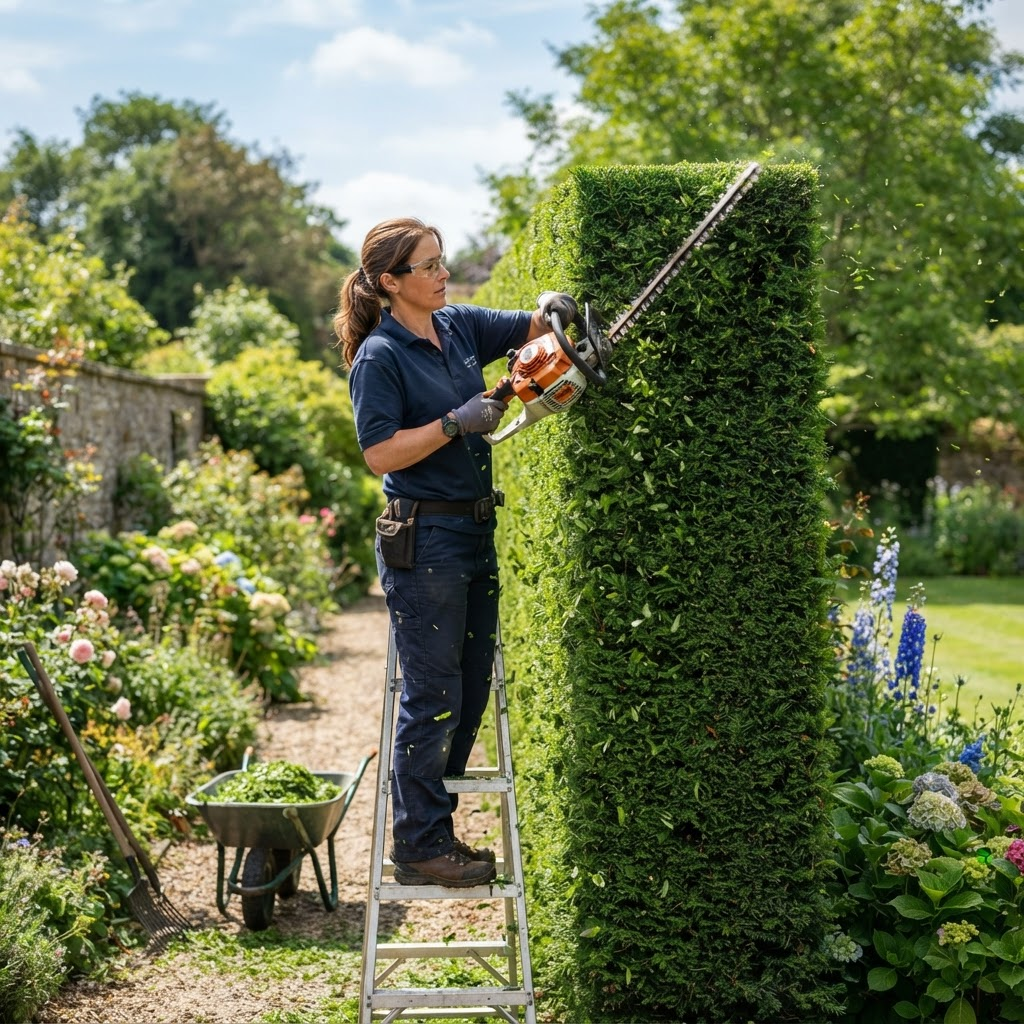
A well-timed trim is the difference between a hedge that's thick, green and sharply shaped and one that looks thin, patchy or overgrown. The right timing depends on the type of hedge you have, but a few simple rules cover most gardens in and around Aylesbury.
Formal hedges
Formal, tightly-shaped hedges such as privet, box and yew benefit from being cut two or three times through the growing season to keep their crisp lines. A trim in late spring followed by another in late summer usually keeps them looking their best without stressing the plant.
Informal and flowering hedges
Flowering hedges are best trimmed just after they've finished flowering, so you don't cut off next year's blooms. Cutting at the wrong time is one of the most common reasons a flowering hedge fails to perform.
Watch out for nesting birds
Nesting birds are legally protected, and nesting season runs roughly from March to August. Before any cutting during this window we always check the hedge carefully for active nests and hold off if we find one. It's the law, and it's the right thing to do.
A quick checklist before you cut
- Check for nesting birds first during spring and summer
- Cut formal hedges in late spring and again in late summer
- Trim flowering hedges straight after they bloom
- Keep the base slightly wider than the top so light reaches the bottom
- Clear and remove all clippings to keep the garden tidy
Not sure what type of hedge you have or when to cut it? We're always happy to take a look and advise — get in touch for a free, no-obligation quote.